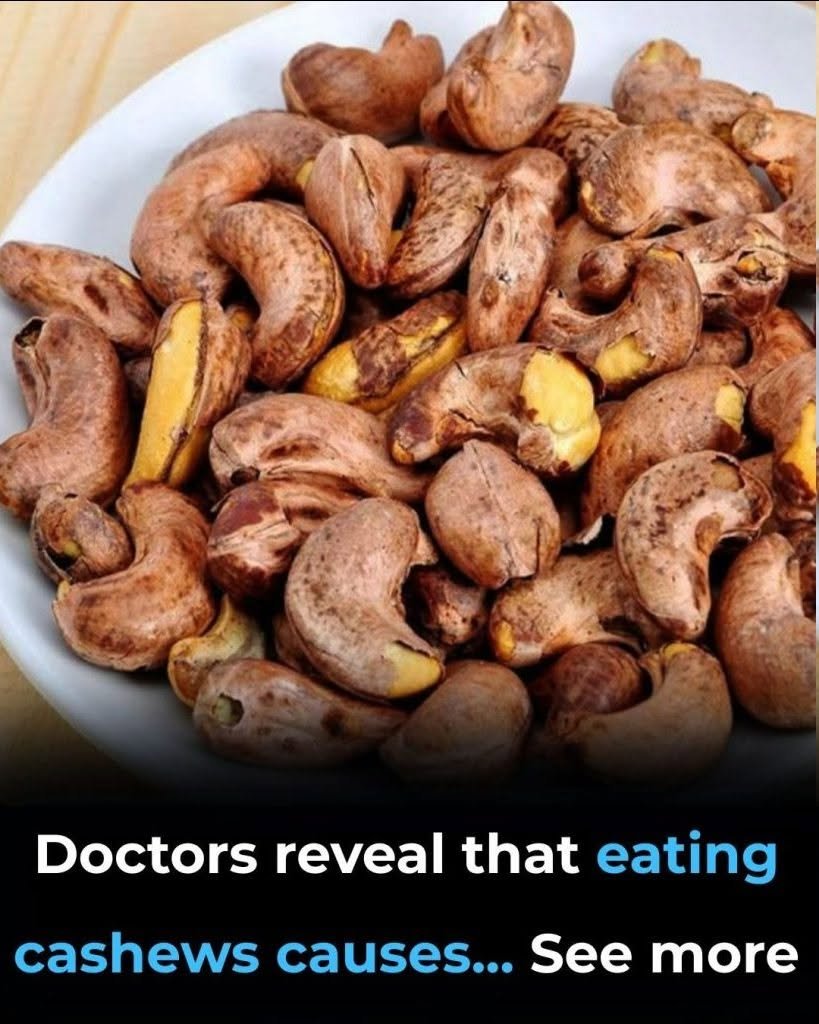
Cashews aren’t just creamy, craveable, and delicious—they’re also nutritional powerhouses packed with essential minerals, healthy fats, and plant-based goodness. Often overlooked in favor of almonds or walnuts, cashews quietly deliver a wide range of health benefits that support everything from your heart to your skin, muscles, and metabolism.
Whether you enjoy them raw, roasted, or blended into silky cashew butter, these humble nuts offer far more than just satisfying crunch.
Let’s explore what doctors and nutrition science say about making cashews a regular part of your diet.
The Nutritional Profile: Small Nut, Big Impact
One ounce of cashews (about 18 nuts) contains:
Nutrient Amount % Daily Value Benefit
Healthy fats 12g — Mostly monounsaturated (heart-healthy)
Protein 5g 10% Muscle maintenance, satiety
Copper 0.6mg 67% Energy production, brain health
Magnesium 83mg 20% Muscle function, blood pressure
Manganese 0.5mg 23% Bone health, metabolism
Zinc 1.6mg 15% Immune function, wound healing
Iron 1.9mg 11% Oxygen transport
Phosphorus 168mg 13% Bone health
And all for about 160 calories per ounce.
What Doctors Say Happens When You Eat Cashews Regularly
1. Your Heart Health May Improve
Despite their reputation as a “high-fat” food, cashews contain primarily heart-healthy monounsaturated and polyunsaturated fats. These fats are associated with:
Lower LDL (“bad”) cholesterol
Reduced triglycerides
Improved blood vessel function
The research: A 2018 study found that regular nut consumption (including cashews) was associated with a significantly lower risk of cardiovascular disease. The FDA even allows a qualified health claim for nuts stating that “eating 1.5 ounces per day of most nuts as part of a diet low in saturated fat and cholesterol may reduce the risk of heart disease.”
2. Your Blood Sugar May Stabilize
Cashews have a relatively low glycemic index compared to many snacks. The combination of healthy fats, protein, and fiber slows the absorption of carbohydrates, preventing sharp blood sugar spikes.
The research: A 2018 study in the Journal of Nutrition found that cashew consumption improved insulin sensitivity in people with type 2 diabetes. Another study showed that adding cashews to meals reduced the post-meal blood sugar response.
What this means: Cashews are an excellent snack choice for anyone concerned about blood sugar—including those with diabetes or prediabetes.
3. Your Brain Gets Essential Minerals
Cashews are exceptionally rich in copper—providing two-thirds of your daily needs in just one ounce. Copper is essential for:
Maintaining nerve cells and their insulating sheaths
Producing neurotransmitters (chemical messengers in the brain)
Supporting energy production in brain cells
They’re also a good source of magnesium, which plays a role in brain plasticity—the brain’s ability to adapt and form new connections.
4. Your Bones May Strengthen
Cashews provide several minerals essential for bone health:
Magnesium – Helps calcium absorption and activates vitamin D
Manganese – Supports bone mineralization
Phosphorus – A key component of bone structure
Copper – Helps maintain collagen and elastin in bone tissue
The research: Adequate intake of these minerals is associated with higher bone density and reduced fracture risk, particularly in older adults.
5. Your Immune System Gets Support
Zinc is crucial for immune function—and cashews provide about 15% of your daily needs per ounce. Zinc helps:
Develop and activate immune cells
Reduce oxidative stress and inflammation
Support wound healing
For vegetarians and vegans, cashews can be an important source of this immune-supporting mineral.
6. Your Red Blood Cells Benefit
The copper and iron in cashews work together to support healthy red blood cells. Copper helps your body absorb and utilize iron, which is essential for:
Forming hemoglobin (the protein that carries oxygen)
Preventing anemia
Maintaining energy levels
7. Your Weight May Be Easier to Manage
This might seem counterintuitive—nuts are calorie-dense, after all. But research consistently shows that nut consumption is associated with healthier body weight, not weight gain.
Why:
Protein and fiber increase satiety (you feel fuller longer)
For Complete Cooking STEPS Please Head On Over To Next Page Or Open button (>)